Dryer Smells Like Burning: When to Stop Using It
The smell itself is a diagnostic clue. Hot lint, scorched fabric, rubber-like friction and electrical overheating do not usually smell the same, and they should not all be treated as a routine dryer odor.
Quick answer
Stop the dryer if you smell burning and disconnect power before checking anything accessible. Start with the lint filter, visible exhaust duct and drum for a scorched item, but do not restart the machine if you see smoke, melted plastic, a damaged plug or a strong electrical odor. Persistent burning smell needs the cause identified before normal use resumes.
Narrow down the cause
Answer a few questions about what your dryer is actually doing. It takes about a minute and nothing is saved.
What is your dryer doing?
Loading the questions…
The questions could not be loaded. The written guide below covers the same ground.
Start With These Quick Checks
- Stop the cycle and disconnect power. Do not keep running the dryer to see whether the smell clears.
- Remove the load and inspect it. Look for a scorched item, melted plastic, rubber-backed material or something that does not belong in a dryer.
- Clean the lint filter. Heavy lint accumulation can contribute to excess heat.
- Inspect the visible exhaust duct. Look for crushing or restriction behind the dryer.
- Check the plug and outlet visually. Melting, discoloration or a strong electrical odor means stop.
- Look for smoke or charring. If either is present, do not restart the dryer before professional inspection.
Smoke, visible charring, a melted plug or outlet, repeated breaker trips, or a strong electrical burning smell are reasons to leave the dryer off rather than run another test cycle.
Where a Burning Smell Comes From
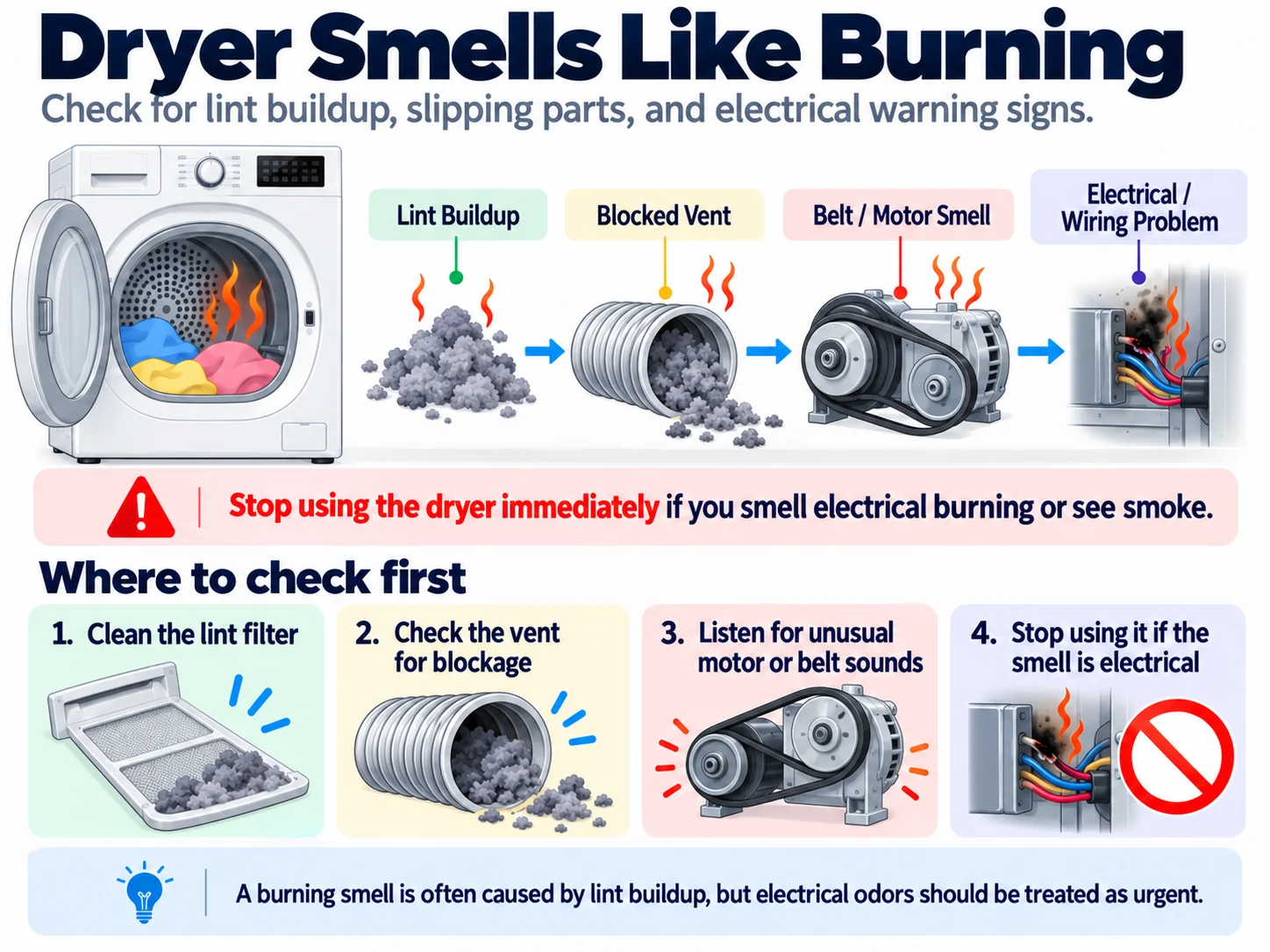
Most Likely Causes
| Cause | What You May Notice | Difficulty |
|---|---|---|
| Scorched item in the load | Smell is strongest on one garment or object | Easy |
| Lint or exhaust restriction | Dryer is unusually hot, drying takes longer | Easy |
| Object rubbing a moving part | Rubber or friction smell, new squeak or scrape | Moderate |
| Belt or support friction | Burning-rubber odor with drum noise | Moderate |
| Motor overheating | Hot electrical smell, dryer may stop mid-cycle | Technician recommended |
| Electrical connection fault | Melted plastic, discoloration, breaker trip | Technician recommended |
1. Something in the Load Is Scorching
Before assuming the dryer itself is failing, inspect what was being dried.
What you may notice: one item smells much stronger than the rest, or there is visible melted plastic, rubber or a darkened spot.
How to check: remove everything and inspect the drum after power is disconnected. Follow the garment or product care label before drying that item again.
What it means: finding a damaged item explains the odor source, but still check for residue left in the drum before using the dryer normally.
2. Lint or the Exhaust Path Is Restricting Air
Lint buildup and restricted exhaust airflow can cause a dryer to run hotter.
The U.S. Fire Administration and CPSC both advise keeping the lint filter and dryer vent path clean. CPSC specifically warns that lint can block airflow and contribute to excessive heat buildup.
How to check: clean the lint filter, inspect the duct behind the dryer for crushing, and check the exterior vent opening.
If the dryer has also been taking much longer than normal, see dryer takes too long to dry.
3. Something Is Rubbing a Moving Part
A trapped object or fabric can create friction as the drum turns.
What you may notice: the burning smell began at the same time as squeaking, scraping or grinding.
How to check: disconnect power and rotate the drum slowly by hand. Inspect the visible drum opening for a trapped item.
If you hear grinding, stop and use the grinding-noise guide rather than continuing to run the machine.
4. Belt or Drum-Support Friction
A worn drive or support component can create heat through friction.
What you may notice: a rubber-like smell, squealing, rough rotation or a drum that has become harder to turn.
What it means: this requires inspection of the mechanical drive system. Do not spray lubricant into the cabinet as a general fix; the correct repair depends on which component is actually wearing.
5. The Motor Is Overheating
A motor that is failing or working against excessive mechanical resistance can become hot.
What you may notice: the dryer stops before the cycle ends, will not restart immediately, or produces an electrical/hot-insulation odor.
If the dryer repeatedly shuts off mid-cycle, note whether it restarts after cooling. That pattern is useful to a technician.
6. An Electrical Connection Is Overheating
Electrical overheating deserves immediate attention.
What you may notice: sharp electrical odor, discolored plastic, a hot or loose plug, visible melting, or a circuit breaker that trips.
What to do next: leave the dryer disconnected. Do not open the receptacle, power connection or live dryer wiring to investigate.
If the breaker has tripped more than once, see dryer keeps tripping the breaker.
What Your Symptoms Mean
- Smell is strongest on one item from the load.Inspect the item and drum for melted or scorched material.
- Burning smell plus very hot dryer and long cycles.Restricted exhaust airflow is an important first check.
- Rubber-like smell plus squeal or scrape.Friction in the belt or drum-support system is plausible.
- Electrical smell plus dryer stops after warming.Motor or electrical overheating needs professional diagnosis.
- Burning smell plus breaker trip.Leave the dryer off and investigate the electrical fault.
- Smoke or visible charring.Do not restart the dryer.
When to Call a Technician
Do yourself: stop the machine, disconnect power, inspect the load, clean the lint filter, check visible venting and look at the plug and outlet without opening them.
Call a technician when the odor returns after simple airflow checks, there is friction noise, the dryer stops as it heats, or the smell appears electrical. Use an electrician when the receptacle or house wiring shows heat damage. Do not keep running a dryer that produces smoke, charring or repeated electrical symptoms.
Sources